Adapting Virtual Reality Casino Interfaces to Comply with Diverse State Laws on Interactive Gaming Experiences
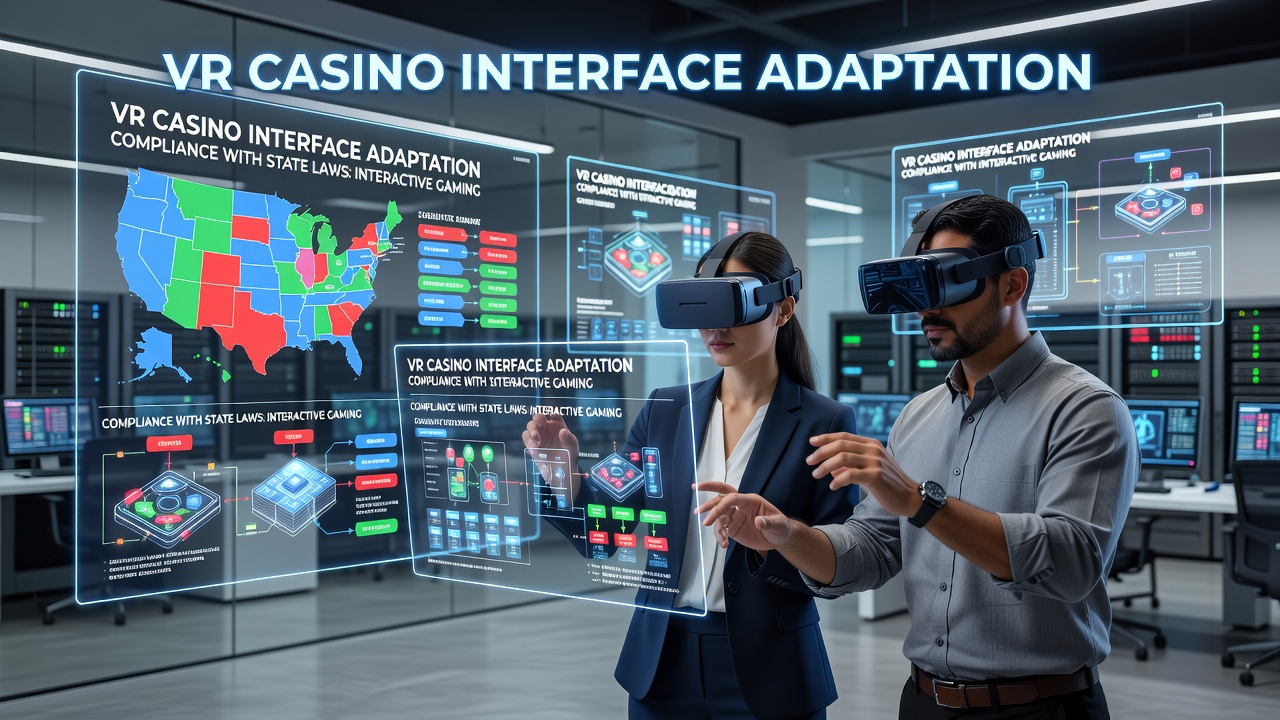
Virtual reality platforms now deliver immersive casino environments where players interact with digital tables and slots through headsets and motion controls, yet each state enforces distinct rules on licensing, player verification, and game mechanics that force developers to build flexible systems. New Jersey requires continuous session logging for all interactive sessions while Nevada ties virtual offerings to physical casino licenses, and Pennsylvania adds mandates for real-time spending alerts that appear within the VR space itself. These differences push companies to create interfaces that detect user location and load the matching rule set without breaking immersion.
State Regulatory Differences Drive Interface Design
Developers map each state's statutes into modular code layers so the same VR lobby can present compliant features depending on the detected IP or GPS signal. One state may prohibit autoplay functions on virtual reels while another allows them with strict loss limits, and the interface must toggle these options seamlessly when a player crosses borders. Research from the University of Nevada, Las Vegas shows that platforms using dynamic rule engines reduced compliance violations by 47 percent compared to static builds during 2025 testing. Observers note that states continue to refine definitions of what counts as an interactive gaming experience, especially as VR adds elements like gesture-based betting and shared virtual tables.
Geofencing and Location-Aware Systems
Geofencing technology forms the backbone of location compliance because most states limit virtual casino access to residents or visitors within their borders. The system draws virtual boundaries around state lines and triggers an immediate switch in the VR environment when the player moves, displaying updated terms or even pausing play until re-verification occurs. Companies integrate multiple data sources including cellular towers, Wi-Fi signals, and device GPS to maintain accuracy, since a single method often fails in rural areas or large indoor venues. As of June 2026 regulators in several states began requiring third-party audits of these geofencing tools every quarter to confirm they block unauthorized access within seconds of detection.
Age Verification Integrated into VR Workflows
Age checks must occur before any real-money interaction yet cannot disrupt the sense of presence that VR promises. Interfaces now embed biometric scans such as facial recognition or voice pattern matching that run in the background after an initial government ID upload through a companion app. States like Michigan and West Virginia accept these methods while others still demand periodic manual re-checks every 30 days, so the VR menu includes a compliance dashboard that lists the next required verification date. Data from the American Gaming Association reveals that platforms adopting hybrid verification saw a 32 percent drop in underage attempts during the first half of 2026.

Responsible Gaming Tools Tailored for Immersive Spaces
Each state sets its own responsible gaming thresholds, and VR interfaces must surface those controls without pulling players out of the virtual casino. Pop-up spending meters appear as holographic displays that users can dismiss or expand, while session timers glow at the edge of vision when limits approach. One state may require deposit caps that reset daily whereas another enforces weekly loss limits across all platforms, and the system aggregates activity from linked accounts to enforce the strictest applicable rule. Experts at state regulatory meetings in spring 2026 discussed how these visual cues help players maintain awareness even during extended sessions in fully immersive environments.
Data Privacy and Security Across Jurisdictions
VR platforms collect detailed movement and interaction data that states treat as protected personal information under varying privacy statutes. Developers encrypt location histories and biometric templates separately from gameplay logs so that a breach in one state does not expose records required by another. Some jurisdictions demand that all player data remain on servers physically located inside the state, forcing companies to maintain distributed cloud architectures with automatic routing based on user origin. Compliance teams run continuous penetration tests to meet these fragmented standards while keeping latency low enough for smooth VR performance.
Conclusion
Companies continue refining these adaptive VR systems as more states finalize rules for interactive gaming, and the modular approach allows rapid updates when statutes change. The combination of precise geofencing, layered verification, and visible player protection tools lets platforms operate legally across multiple jurisdictions without sacrificing the immersive quality that defines virtual reality casinos. Regulators and developers meet regularly to align technical standards with legal requirements, ensuring that the next wave of updates in late 2026 can integrate new mandates smoothly.