Mapping the Hidden Links Between Slot Algorithm Designs and State-Enforced Responsible Gaming Protocols in Licensed Mobile Platforms

Slot algorithm designs in licensed mobile platforms incorporate specific parameters that align with state-enforced responsible gaming protocols, creating operational frameworks where random number generators interact directly with session monitoring tools. These connections determine how play sessions are structured, how limits are applied, and how player data triggers interventions across regulated markets. Observers note that algorithm adjustments often occur behind the scenes to meet compliance standards without altering the core randomness that defines outcomes.
Core Components of Slot Algorithms in Regulated Environments
Random number generators form the foundation of slot mechanics, producing results through complex mathematical sequences that certified testing labs verify for fairness. In mobile platforms these generators integrate with backend systems that track spin counts, time elapsed, and betting patterns in real time. State regulations require platforms to embed responsible gaming features such as mandatory reality checks or deposit thresholds directly into the algorithm logic, so that certain thresholds automatically pause gameplay or prompt user confirmation. Data from regulatory filings shows these integrations have expanded in several jurisdictions since early 2025, with mobile operators updating codebases to accommodate evolving protocol requirements.
Volatility settings and return-to-player percentages also tie into protocol enforcement because higher-volatility games trigger more frequent monitoring alerts under certain state rules. Developers configure these parameters during initial certification, then maintain them through ongoing audits that verify continued compliance. Researchers at institutions like the University of Nevada Reno have documented how algorithm modifications for responsible gaming can shift average session lengths while preserving the statistical integrity of game results.
State-Level Protocols and Their Technical Requirements
States such as New Jersey, Pennsylvania, and Michigan mandate specific technical standards that licensed operators must implement in their mobile applications. These standards require algorithms to support features like customizable loss limits and automated self-exclusion flags that update player profiles across multiple platforms. When a player reaches a state-defined threshold, the system halts further spins until the designated cooling-off period expires. Integration occurs through API connections between the game engine and the state-approved responsible gaming module, ensuring seamless enforcement without manual operator intervention.
Additional requirements include time-based session caps and pop-up notifications that appear after fixed intervals of continuous play. Algorithm designers build these triggers into the core code so that the game engine itself recognizes when to initiate a protocol response. Figures released by the New Jersey Division of Gaming Enforcement indicate that mobile slot sessions subject to these automated controls have shown measurable changes in play duration patterns through the first quarter of 2026.
Integration Points Between Algorithms and Enforcement Systems
Hidden connections become visible when examining how player behavior data flows from the slot algorithm into state monitoring dashboards. Each spin generates metadata that responsible gaming software analyzes for signs of extended sessions or rapid betting increases. When algorithms detect these patterns, they activate predefined responses such as temporary game suspension or redirection to support resources. This process relies on real-time data exchange between the game server and external compliance tools approved by regulators.
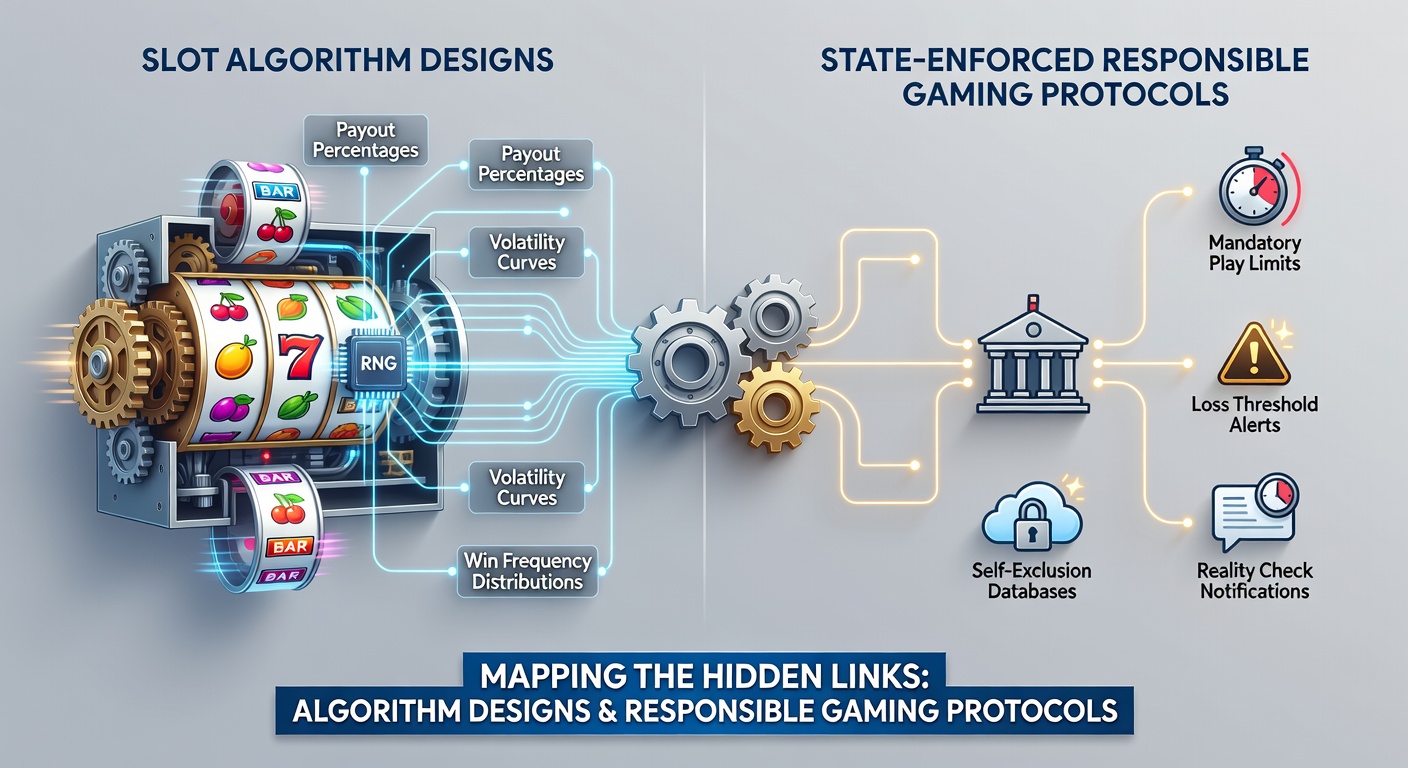
Operators in multiple regions have adopted unified compliance platforms that standardize these links across different game titles. The approach allows a single set of protocol rules to apply consistently whether a player engages with high-volatility or low-volatility slots. In May 2026 several states introduced updated technical specifications that require even tighter synchronization between algorithm outputs and enforcement triggers, particularly for games featuring bonus rounds or progressive jackpots that can extend play sessions unexpectedly.
Certification Processes and Ongoing Compliance Monitoring
Before deployment, slot algorithms undergo rigorous testing by independent laboratories that verify both mathematical fairness and responsible gaming functionality. Testers examine how the system responds to simulated player behaviors that approach or exceed state-defined limits. Once approved, platforms submit regular reports detailing any algorithm updates and their effects on protocol enforcement. These reports help regulators confirm that changes maintain compliance without introducing new vulnerabilities.
Industry associations including the American Gaming Association have published guidelines that outline best practices for maintaining these technical linkages. The guidelines emphasize the importance of modular code architecture, which permits responsible gaming features to be updated independently of core game mechanics when state rules evolve.
Conclusion
The interplay between slot algorithm designs and state-enforced responsible gaming protocols continues to shape mobile platform development across licensed markets. Technical standards established by regulators require precise integration points that balance game integrity with player protection measures. As states refine their requirements through 2026, algorithm developers maintain focus on adaptable systems capable of supporting new compliance demands while preserving the random outcomes central to slot entertainment.