Poker Power Plays: Chasing Bonuses Across America's Patchwork of Legal Card Rooms
Poker Power Plays: Chasing Bonuses Across America's Patchwork of Legal Card Rooms
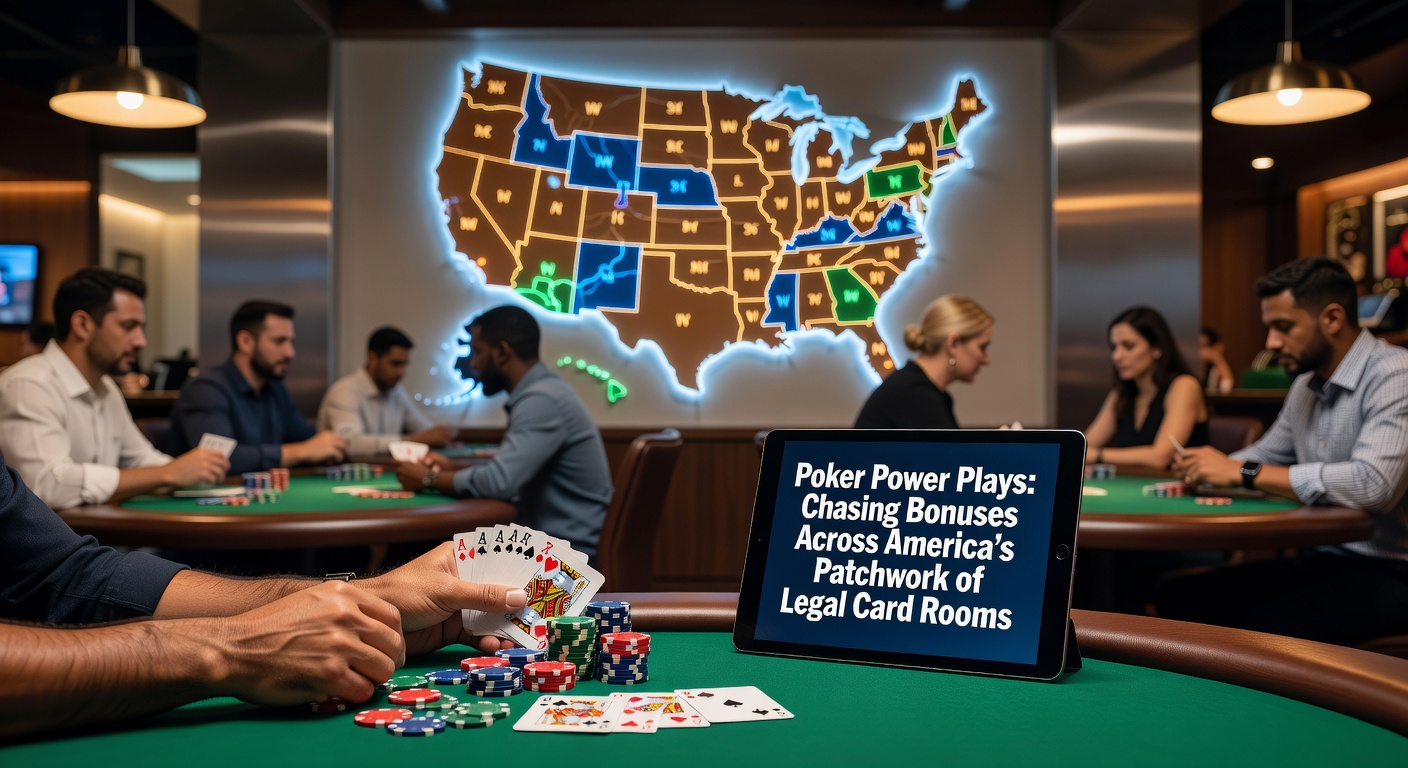
The Fragmented World of U.S. Poker: Where Legality Shapes the Bonus Hunt
America's poker landscape remains a quilt of state-specific rules, tribal compacts, and municipal ordinances that dictate where players can legally chase high-value bonuses in live card rooms; while Nevada and New Jersey lead with full casino integration, California thrives on massive tribal venues like the Commerce Casino, and Florida's pari-mutuel facilities offer limited action, creating opportunities for savvy grinders to crisscross the country maximizing promotions. Data from the Nevada Gaming Control Board reveals that in fiscal year 2025, poker revenue hit $320 million statewide, fueled partly by bonus-driven traffic at rooms like the Bellagio and Wynn, where players rack up rakeback and leaderboard prizes. But here's the thing: states like Pennsylvania and Michigan mirror this with their own regulated rooms, yet places like Texas restrict everything to private clubs, forcing bonus hunters to navigate a maze of compliance while hunting deals that can turn a $10,000 bankroll into serious profit through structured play.
Observers note how this patchwork evolved since the 2011 UIGEA crackdown on online poker, shifting focus to live venues where bonuses take forms like high-hand jackpots, bad-beat stories, and splashy sign-up offers; take one grinder from Los Angeles who logged 500 hours across SoCal rooms in 2025, pocketing $15,000 in promos alone by hitting qualifying hours at the Bicycle Casino and Gardens Casino. Turns out, the real power plays emerge when players align travel with seasonal promotions, such as summer WSOP circuits in Vegas or winter deepstacks in South Florida, where rooms dangle free hotel stays alongside cashback to lure volume players.
Decoding the Bonus Arsenal: From Rakeback to High-Hand Havoc
Card rooms deploy a arsenal of incentives designed to boost table occupancy and loyalty, starting with rakeback programs that rebate 20-40% of the house rake based on tracked hours or hands played; at venues like Resorts World in Las Vegas, players earn points redeemable for cash or comps, while Pennsylvania's Live! Casino offers tiered systems where high-volume participants snag up to $5,000 monthly. And then there are high-hand promotions, where hitting quads or better during specific hours triggers payouts from $500 to $1,000, stacking the odds in favor of aggressive playstyles that fill seats during off-peak times.
What's interesting is how splash pots and leaderboard races amplify these, with rooms like the Maryland Live! pitting players against each other for $10,000 monthly prizes based on total rake generated; data indicates that in April 2026 alone, such events distributed over $2 million nationwide, as reported by industry trackers, drawing road warriors who plot multi-room circuits to qualify across states. Yet reload bonuses, often 100% matches up to $1,000 for new deposits into player accounts, come with playthrough requirements that demand 30-50 hours of tracked action, turning casual visits into calculated grinds.
Experts who've mapped these offers point to tools like Bravo Poker app data, which logs real-time promos; one study from the University of Nevada's gaming research center found that bonus hunters averaging 20 hours weekly across three rooms boosted their effective hourly rate by 25%, blending skill with promotional math. So players stack these—rakeback for steady income, high-hands for variance bombs, leaderboards for big swings—creating power plays that reward mobility over monotony.

Hotspots and Road Maps: Where the Best Bonuses Light Up the Map
California dominates with 90-plus card rooms under tribal and non-tribal banners, where the Commerce Casino's $250,000 monthly high-hand pool draws lines out the door; players often pair it with the Hollywood Park Casino's 30% rakeback, logging dawn-to-dusk sessions before hopping to Vegas for contrast. Nevada counters with 40 rooms, but the action concentrates in Vegas stripsides—Bellagio's daily tournaments feed $100,000 guarantees laced with $5,000 freerolls for point leaders—while locals spots like the Orleans offer 10x points multipliers on weekends.
East Coast grinders target Atlantic City, where Borgata and Golden Nugget run synced promos totaling $1 million in April 2026 leaderboards, per regional gaming commission filings; Florida's cards-only rooms at Best Bet Jacksonville splash $500 high-hands hourly, appealing to snowbirds chaining Miami-area stops. And don't overlook up-and-comers: Michigan's MotorCity Casino ramped bonuses post-2025 expansions, with $2/$5 No-Limit games yielding 35% rakeback that rivals Vegas, while Pennsylvania's Rivers Pittsburgh layers bad-beat jackpots atop hourly cash games.
Those who've cracked the code build itineraries around peak promo windows; consider the case of a mid-stakes pro who circled five states in March 2026, nabbing $8,200 from Oklahoma's WinStar high-hands, Texas private club splash pots (legal under member rules), and Arkansas' short-session leaderboards, proving that while interstate travel eats gas money, the math tilts positive for disciplined travelers. But the ball's in the rooms' court too—they tweak offers weekly, so apps and forums become essential recon for staying ahead.
Navigating the Grind: Bankrolls, Taxes, and the Fine Print Traps
Chasing bonuses demands robust bankroll management, since variance in high-hand reliant games can swing 20 buy-ins deep even for pros; data from New Jersey Division of Gaming Enforcement reports shows that 65% of bonus redemptions in 2025 went to players logging over 100 hours monthly, underscoring the volume play requirement. Taxes bite hard too—W-2G forms trigger for payouts over $1,200, with states like California withholding 7% upfront, although interstate filers often deduct travel as business expenses if structured right.
Here's where it gets tricky: multi-accounting violates most terms, leading to bans at chains like Station Casinos, while age and ID checks tighten post-2024 federal audits; one notable case saw a Pennsylvania room forfeit $12,000 in earned rakeback to a player using aliases, as ruled in arbitration. Yet pros mitigate with tracked play logs and VPN-free apps for promo verification, turning potential pitfalls into streamlined ops.
And for the social angle, card room comps—free meals, rooms, shows—layer on value, with Vegas properties comping 1-2 nights per 40 hours at mid-stakes; Florida venues match with RV parking for road trippers, making the chase sustainable even as fuel costs climb in 2026.
Conclusion: The Endgame for Bonus Nomads
America's legal card rooms fuel a dynamic bonus ecosystem where grinders leverage the patchwork laws to stack edges, from California's endless high-hand streams to Vegas's rakeback empires and East Coast leaderboard wars; April 2026 data hints at escalating competition, with total promo pools surpassing $50 million quarterly as rooms vie for post-pandemic traffic. Players who master the circuits, blending promo math with disciplined travel, uncover sustainable edges in a game that's as much about logistics as cards. The writing's on the wall: in this fragmented market, those tracking offers across states hold the power, turning scattered opportunities into cohesive profit plays.