Tracing Cross-State Data Sharing Protocols Among Poker Networks Operating Under Separate Oversight Systems
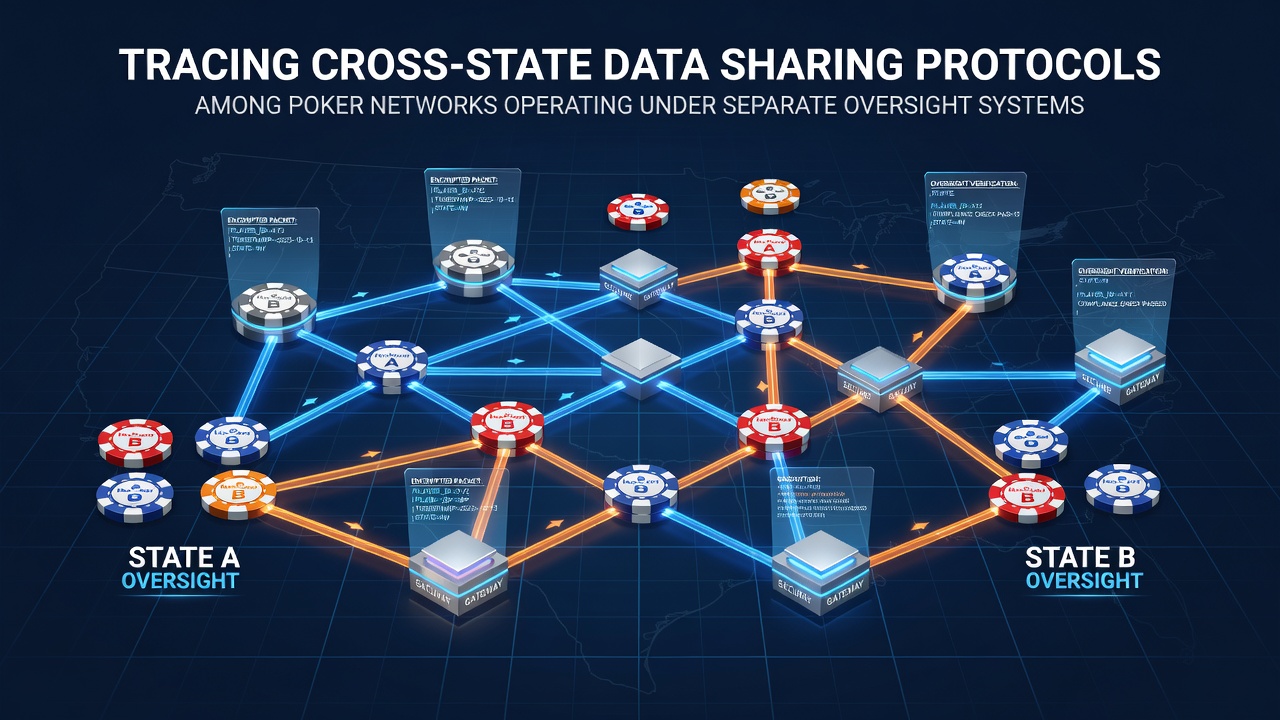
State regulators across the United States have developed distinct frameworks for overseeing online poker operations, and networks must navigate these separate systems while maintaining secure data exchange channels that support compliance and player protection standards. Networks operating in multiple jurisdictions transmit player information through encrypted protocols designed to align with each state's specific requirements, and these exchanges occur without creating a unified national database.
Regulatory Landscape Across Jurisdictions
Each state maintains its own licensing authority and data retention rules, so a network licensed in New Jersey follows guidelines from the Division of Gaming Enforcement while a Michigan operation complies with the Michigan Gaming Control Board directives. Data sharing occurs when networks facilitate multi-state tournaments or when player exclusion lists require synchronization to prevent access across borders. Protocols rely on application programming interfaces that authenticate requests before transmitting limited datasets such as account identifiers, self-exclusion status, and transaction histories.
Observers note that these interfaces incorporate token-based authentication and audit logs, which allow regulators in one state to verify compliance without accessing full records held under another state's oversight. The approach preserves jurisdictional boundaries while enabling basic coordination for issues like money laundering detection and responsible gaming enforcement.
Technical Mechanisms for Secure Exchange
Poker networks implement standardized data formats such as JSON or XML schemas that map player attributes to fields required by each participating regulator. Transmission occurs over secure sockets layer connections with mutual certificate validation, and session tokens expire after short intervals to limit exposure. When a player registers in a second state, the network queries the originating jurisdiction's system to retrieve exclusion flags and account status before granting access.
Case examples from 2025 show that networks like those connected to the Interstate Poker Compact exchanged approximately 2.3 million verification requests monthly, with response times averaging under 800 milliseconds. These figures come from operational summaries released by participating state agencies and demonstrate the scale of routine cross-border checks. The process avoids full data transfer by returning only binary flags for most queries, which reduces bandwidth demands and storage obligations under varying retention statutes.
Compliance Challenges and Protocol Adaptations
Separate oversight systems impose different encryption standards and breach notification timelines, forcing networks to maintain parallel compliance modules for each state. One adaptation involves middleware layers that translate requests into jurisdiction-specific formats before forwarding them, and this middleware logs every transaction for post-audit review. In July 2026, several networks updated their systems to incorporate quantum-resistant algorithms following guidance from federal cybersecurity assessments, although state-level mandates had not yet required the change.
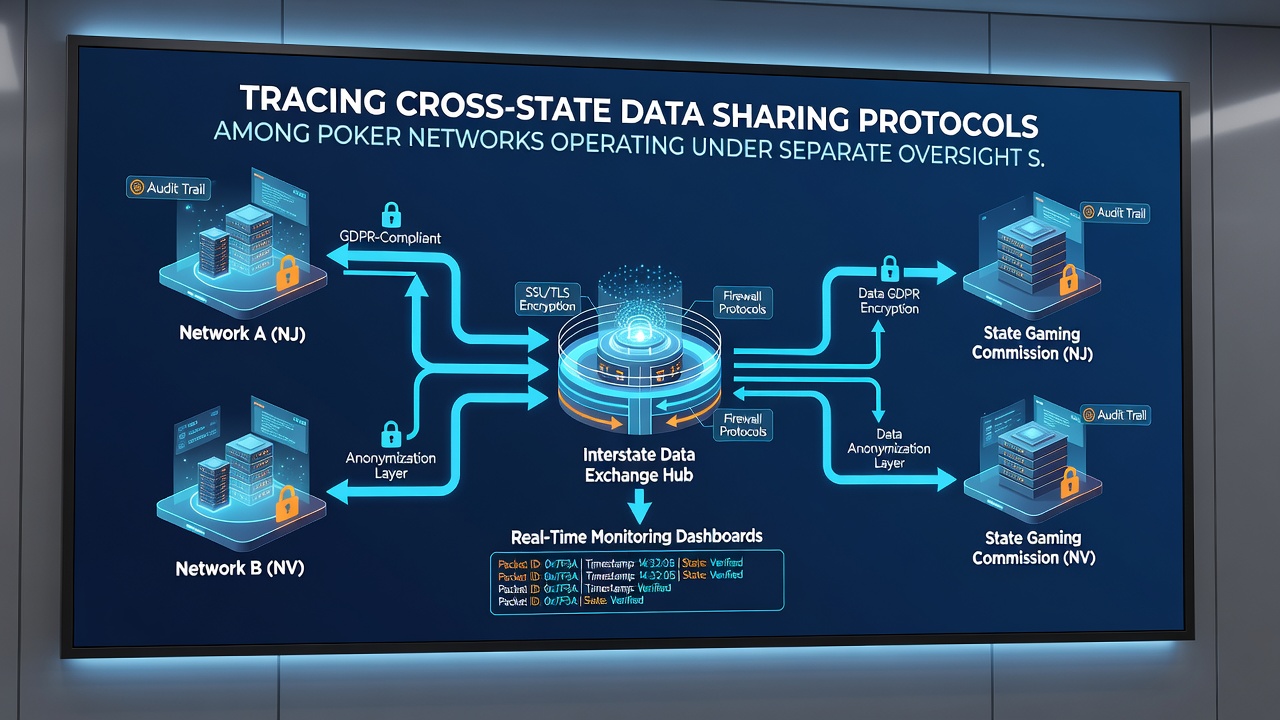
Researchers at the University of Nevada, Reno documented how these middleware solutions reduced integration errors by 41 percent in multi-state deployments during 2025 testing phases. Their report highlighted that networks using modular designs adapted faster when one state revised its data access rules without affecting operations in others. The modular structure also supports selective disclosure, where only necessary fields travel across borders during verification events.
Player Protection and Exclusion Synchronization
Self-exclusion programs require networks to check multiple state registries before allowing play, and protocols route these checks through a central clearinghouse operated by a third-party vendor under contract with several regulators. The clearinghouse returns aggregated status without revealing which state holds the exclusion record, thereby protecting the confidentiality of each jurisdiction's list. Networks must reconcile any discrepancies within 24 hours and suspend accounts flagged by any participating state.
Industry reports from the American Gaming Association indicate that synchronized exclusion checks prevented over 18,000 attempted logins in the first half of 2026 across compact member states. These checks integrate with age verification systems that pull from state motor vehicle databases, creating layered authentication sequences that satisfy the strictest participating rules while remaining efficient for legitimate players.
Future Developments in Interstate Coordination
Discussions among state attorneys general have explored expanding data sharing agreements to include real-time transaction monitoring for fraud patterns, yet implementation remains limited by differing statutory authorities. Some states have piloted blockchain-based ledgers for audit trails that allow regulators to verify protocol adherence without direct database access, and early results from a 2026 Ontario pilot showed reduced reconciliation times compared to traditional log reviews. Networks continue to refine their architectures in response to these evolving standards.
Conclusion
Cross-state data sharing protocols in poker networks reflect a balance between jurisdictional independence and operational necessity, with technical solutions evolving to meet diverse regulatory demands. The systems in place as of mid-2026 emphasize encrypted, limited-scope exchanges that support compliance without compromising state autonomy. Ongoing refinements in authentication methods and middleware design indicate continued adaptation as more states authorize online poker operations.